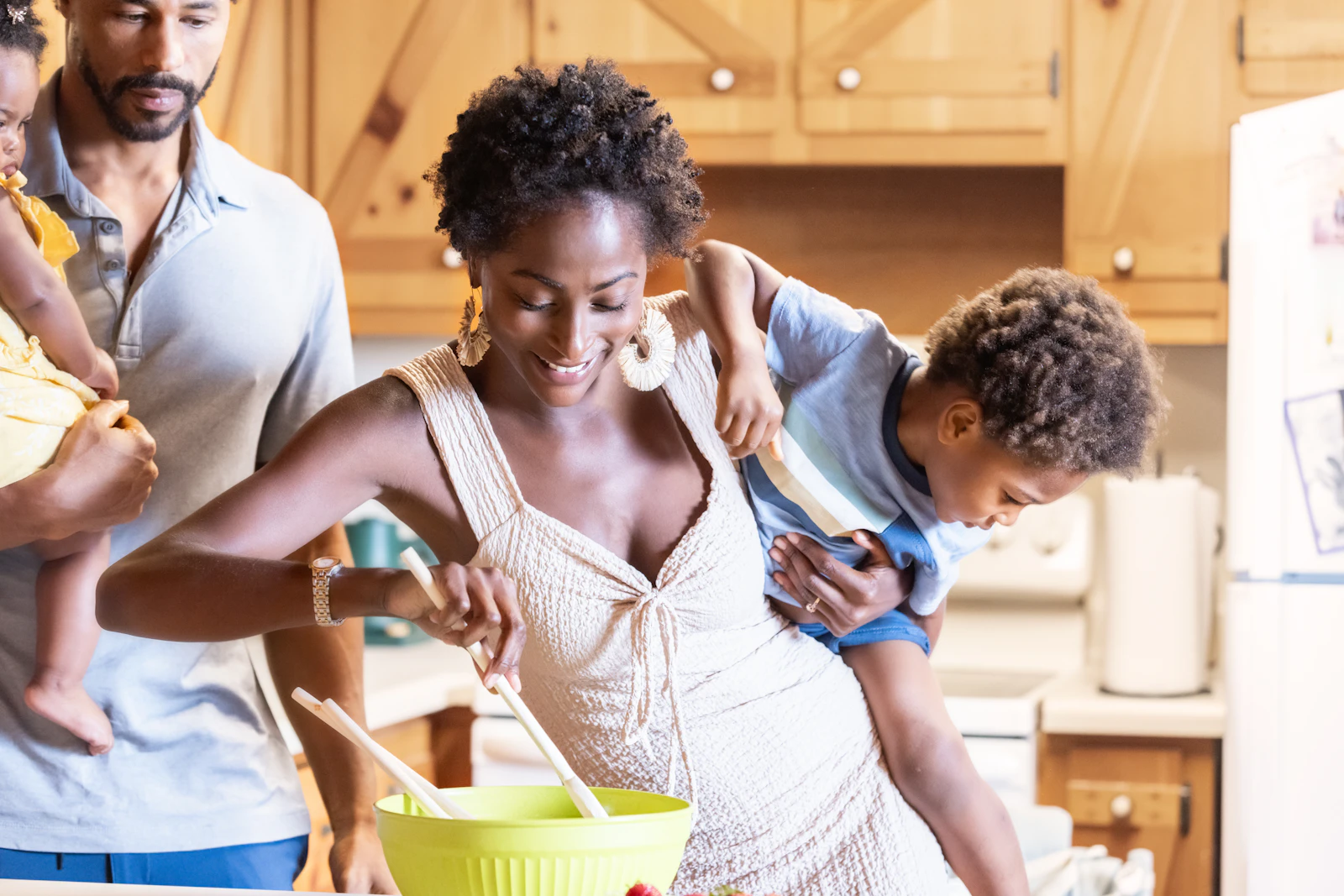
A family cooking class in Ubud can be one of the rare holiday activities where adults and children are involved in the same experience for the same reason. Instead of asking children to stay interested while adults watch, a good class gives them real jobs: washing herbs, measuring ingredients, pounding spices, shaping food, mixing sauces and helping build the meal the family will later eat.
The important word is “good.” A class that welcomes children is not automatically a good fit for every family. Age rules vary, session lengths vary, and the difference between meaningful participation and simply being allowed to attend can be large. Parents should judge the experience by tasks, supervision, pace and logistics rather than by a family-friendly badge.
Family Friendly Is a Design Question
A useful family class is designed so children can contribute without being pushed into work they are not ready to handle. Younger children can participate through low-risk preparation. Older children may be ready for more sequencing, cutting or supervised heat work. Adults still need to know where the hot oil, flames and sharp tools are, and who is responsible for controlling those stages.
Development matters more than a single universal age. Current Ubud operators use different child ranges, including dedicated classes for young children, programs starting around school age, and private family experiences covering a much wider age span. Those differences are a reminder that eligibility is an operator rule, not a measurement of your child’s readiness.
Start With What Your Child Can Do for 20 Minutes
Parents often think about whether a child can manage a three- or five-hour activity. A more practical question is what the child can do during each block of the experience. Can they follow a short sequence, wait while another person takes a turn, keep hands away when told to stop, and return to a task after a break?
Cooking naturally creates changing activities, which can help. A child may spend a few minutes washing leaves, then pounding ingredients, then rolling or shaping something, then watching a hot stage, then eating. This variety can be easier than asking a child to concentrate on one explanation for an entire morning.
Match Tasks to Ability, Not Pride
Children usually enjoy being trusted with a real job, but the goal is not to prove they can use the most adult-looking tool. Safety guidance for families consistently recommends age-appropriate tasks and active supervision. A young child may be perfectly capable of rinsing vegetables or tearing leaves while not being ready to work over a hot pan.
Good task matching keeps children involved without turning parents into anxious safety monitors. Ask the host which steps are normally given to children and which are handled by adults or staff. If a child has never used a knife at home, a holiday cooking class is not the place to create pressure around independence.
Private and Shared Classes Solve Different Family Problems
A private class can be especially useful when siblings have very different ages, one child needs more breaks, the family has complex food requests, or parents want to ask many questions without worrying about slowing a larger group. The pace can often follow the booking group rather than a room full of strangers.
A shared class has its own advantages. Social children may enjoy meeting other travelers, and a well-organized group session can have enough stations and staff to keep everyone active. It can also cost less. Do not assume private is automatically better; decide whether pace control is worth paying for in your family.
Ask How the Workstations Are Organized
Class size matters less than what happens at the table. Two people sharing a station can be very hands-on if both have clear tasks. Eight guests around one preparation area can feel crowded if only one person is chopping while everyone else watches.
For families, ask whether adults and children work together, whether each family has a station, and whether staff take over the dangerous stages. If your child is shy, a private station may help. If your child is social and competitive, a shared class may be more energizing.
Plan Different Roles for Siblings of Different Ages
Families with two or more children rarely need every child to do the same job. In fact, forcing identical tasks can make the class harder. A younger child may enjoy washing herbs, measuring or shaping food while an older sibling handles a longer sequence or more precise preparation. Both can contribute to the same dish without pretending they have the same skills.
Ask whether the instructor can divide jobs by ability. This matters in private classes, but it also matters in shared sessions where families may work at one station. A useful setup lets each child see a clear contribution to the finished meal. It also reduces competition for the most exciting tool or task.
If one child loses interest earlier, parents should know whether that child can sit nearby, eat a prepared component, help with plating or take a short break while the rest of the family continues. Flexibility around roles is often more valuable than adding another recipe to the menu.
Choose the Session Length Your Family Can Actually Enjoy
Ubud cooking experiences can range from compact kitchen sessions to half-day programs that combine pickup, market visits, farms, cooking and a meal. The longer option is not automatically more family friendly simply because it contains more activities.
Think about wake-up time, breakfast, naps, heat, walking tolerance and how your child behaves before lunch. A morning market may be fascinating for a child who enjoys new sights and smells, but a very early pickup can undermine the rest of the day for a child who needs a predictable sleep schedule.
Decide Whether the Market Adds Value for Your Children
A market visit gives food context before the cooking starts. Children can see unfamiliar fruit, vegetables, herbs and spices, then recognize some of them later at the cooking table. This can make the meal feel like a story rather than a list of recipes.
Markets are also busy, warm, noisy and full of sensory input. Ask how long the visit lasts, how much walking is involved and whether there are toilets nearby. If the market is likely to use up your child’s attention before the cooking begins, a kitchen-only class may produce a better family experience.
Food Preferences Need More Detail With Children
A child who says food is “too spicy” may be reacting to chili heat, unfamiliar aromatics, texture or simply a new dish. Tell the host what the child normally eats and what ingredients are definite problems. Mild spice requests are easier to plan when the kitchen knows whether the whole family wants mild food or only one plate needs adjustment.
For vegetarian, vegan or religious food preferences, ask how the menu changes. For allergies, go further and ask about ingredients, shared equipment, surfaces and oils. A menu substitution is not the same as an allergen-free kitchen.
Make the Meal Part of the Activity
Children are often more willing to taste food they helped prepare. The final meal also gives the class a natural finish: the work has a purpose, and the family can talk about which steps changed the ingredients most.
Do not worry if a child does not love every dish. Participation can still be successful if they learned what turmeric smells like, discovered how a mortar changes a spice mixture, or took pride in one item they made themselves. A cooking class does not need to turn a cautious eater into an adventurous eater in one afternoon.
Plan for Heat, Knives and Hot Oil
Parents should know where the high-risk kitchen zones are before children become excited and start moving around. Hot pans, boiling liquids, grills, oil and sharp tools require clear boundaries. Young children should have safe jobs away from uncontrolled heat, while older children need direct instruction and supervision when their tasks become more advanced.
Ask whether the chef demonstrates dangerous steps, whether adults take over, and whether children have a defined place to stand. The best family atmosphere is relaxed because the boundaries are clear, not because safety is treated casually.
Think About Clothing and Shoes
Choose light, comfortable clothing that can handle splashes and food stains. Closed shoes are useful when a program includes a market or farm walk, and they also provide more protection around dropped utensils or hot spills than open sandals.
For outdoor components, consider a hat, sunscreen and rain protection. If aprons are provided, they help with mess but do not replace sensible clothing.
Check Toilets, Strollers and Walking Access
These details rarely appear in the headline, but they can decide whether a family enjoys the day. Ask about toilet access, steps, uneven farm paths, stroller practicality and the distance from parking to the cooking area if anyone in the family has limited mobility.
If you are traveling with an infant or toddler who is not cooking, find out where they can safely stay during hot stages and whether another adult can step away with them without disrupting the class.
Calculate the Family Price, Not the Adult Price
Cooking-class pricing can use adult rates, child rates, family packages, minimum participant rules or private-group totals. Some classes include transport, while others require extra payment outside a certain area.
Calculate the amount for the entire family after child pricing, taxes, service charges and transport. Then compare the format. Paying more for a private session can make sense when it removes several sources of friction, but families who are comfortable in a shared class may get better value from a well-organized group experience.
Transport Can Be More Valuable for Families Than It Looks
An included pickup can remove the need to find a vehicle large enough for the family, coordinate a driver, or explain a rural location. But “Ubud pickup” may mean a central meeting point rather than a hotel door.
Send the exact accommodation before booking and ask about the return journey. If you use a child seat in Bali, discuss that specifically rather than assuming it will be available.
Ask About Breaks and Flexibility
Children do not always need a shorter class; sometimes they need a class with natural pauses. Eating an appetizer, walking through a garden, washing hands, drinking water or watching an adult handle a hot stage can reset attention.
Private sessions often make break timing easier, but group classes can also work well if the schedule already alternates cooking and eating. Ask how the experience flows rather than looking only at the total duration.
What Parents Should Confirm Before Paying
Send the children’s ages and ask what tasks they will actually perform. Confirm whether adult supervision is required, how hot and sharp stages are handled, how many people share a station, and whether breaks are possible. Add dietary details, allergy information, spice preferences, your exact accommodation and whether the selected session includes the market.
Then confirm the total family price, pickup and return arrangement, expected duration, cancellation terms and what happens if the child decides not to participate in every stage. A clear answer is more valuable than a long marketing description.
How Pak Lunga’s Current Family Format Works
Pak Lunga’s direct cooking lessons near Ubud are private for one reservation group, which gives families a single-group pace rather than a shared public class. The experience centers on five Balinese dishes and a meal. Ubud round-trip pickup is included, while transport from outside Ubud is confirmed separately. Families can choose the cooking-and-meal format or request the early Pejeng market option.
Children ages 5 to 11 currently pay 50 percent of the applicable adult rate, while infants ages 0 to 4 join free. At least one adult is responsible for supervising children around knives, heat, oil and equipment. Vegetarian requests can be planned in advance; vegan, allergy, gluten and cross-contact concerns need direct confirmation rather than assumptions.
One complimentary beer is included for each adult guest, but alcohol is optional and applies only to adults who are legally permitted to drink. It is not part of any child offer.
When a Family Cooking Class Is a Strong Choice
A cooking class is a strong family activity when children like making things, parents want a shared experience rather than separate entertainment, and the schedule leaves enough energy for the meal at the end. It is especially useful for families who want culture to be interactive: ingredients, tools, techniques and food become the way the family learns.
It may be a weaker choice for a very young child who cannot stay away from hot areas, a child already exhausted by a packed itinerary, or a family that needs allergy controls the kitchen cannot guarantee. Choosing another activity in those cases is not a failure; it is good trip planning.
The Best Family Class Is the One Your Children Can Join Meaningfully
Do not chase the longest menu or the youngest permitted age. Look for a class where the tasks match your children, adults understand the safety boundaries, the pace fits the family, food needs are discussed honestly and transport does not create extra stress.
When those pieces line up, the cooking lesson becomes more than a way to fill a morning in Ubud. Everyone contributes to the same table, and the finished meal gives the family a simple reason to remember what they learned together.
Families can use the current Balinese cooking class Ubud overview to check the format and pickup details before booking.