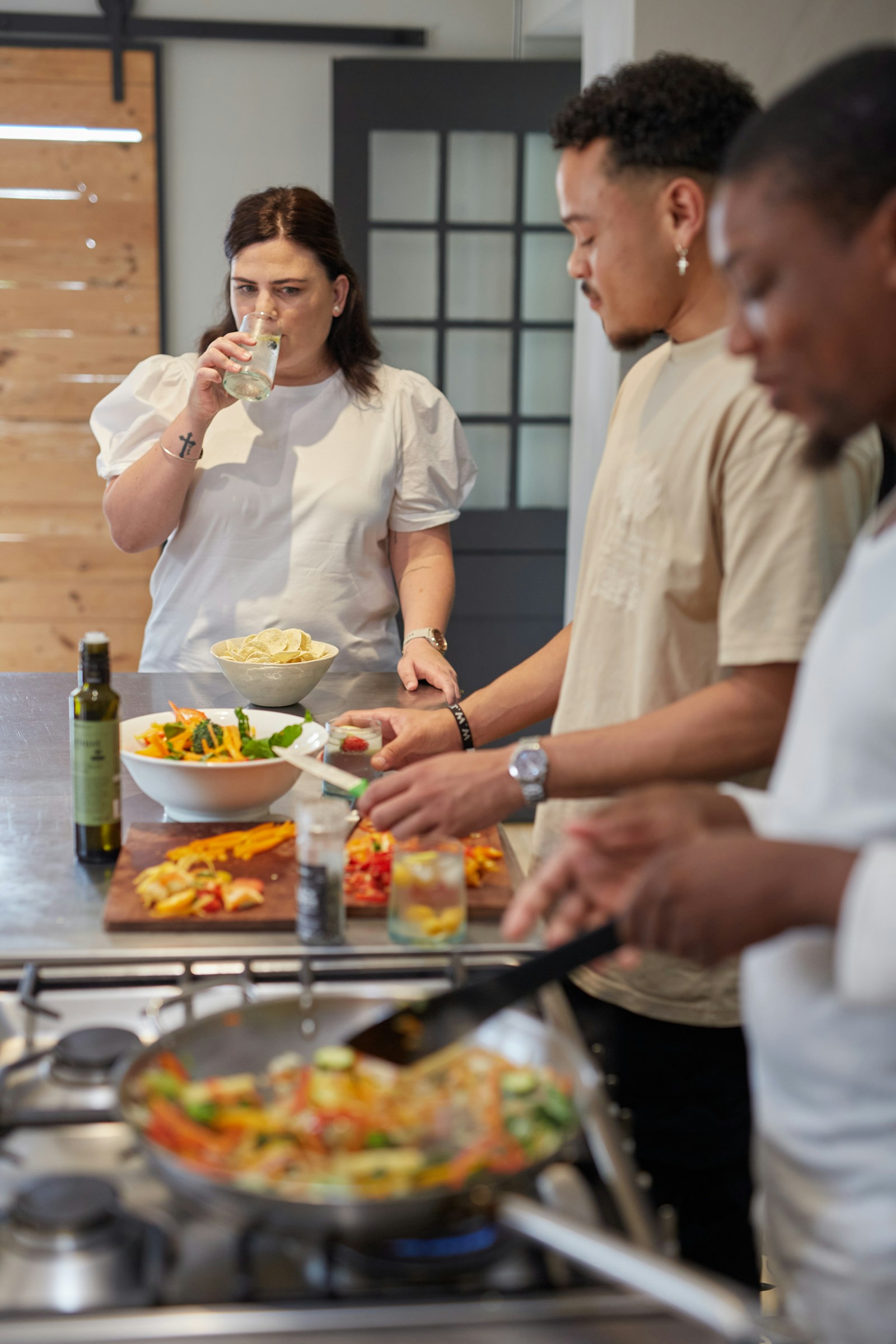
A girls trip to Ubud is easier to enjoy when the group has one shared activity that leaves room for conversation. A cooking class can fit that role because the session combines a practical task, a meal and a reason to make decisions together. It does not depend on everyone having the same interests or cooking experience. Each friend can take a different role and still feel included.
The useful question is not whether a class looks photogenic or promises an interactive experience. Ask how the group will actually spend its time: who prepares ingredients, how people rotate, how much guidance is available and what happens when one guest is more confident than the others. A small group can have a relaxed and memorable session when the format supports participation instead of turning one person into the unofficial chef.
Start with the kind of group time you want
Before comparing classes, decide what your friends want from the activity. Some groups want a social morning with a meal at the end. Others want to learn techniques, understand local ingredients or try something that feels different from another restaurant visit. A class can support all of these goals, but the right format depends on the balance between learning, movement and conversation.
Keep the decision open enough for different personalities. The friend who wants hands-on work should have a real task, while the person who prefers a slower pace should not feel pressured to perform. Agreeing on the group mood first makes it easier to ask practical questions later.
Why cooking gives a small group a shared rhythm
A meal creates natural stages: choosing or reviewing ingredients, preparing them, cooking, tasting and sitting down together. Those stages give a group a rhythm without requiring everyone to talk constantly. Friends can focus on a task, exchange opinions about flavour and return to conversation while another step is underway.
This rhythm also helps a trip feel less repetitive. A sightseeing stop can be enjoyable but often leaves the group following the same route and schedule. Cooking gives each person a small decision to make, so the experience becomes something the group builds together rather than simply observes.
Choose a format that matches your group size
Small groups should ask whether the class is private, shared with other guests or arranged around a limited number of workstations. A private session may make it easier to adjust the pace and keep the group together. A shared class can add variety and conversation, but friends should understand how much of the session will be spent with people outside their trip.
Do not assume that a smaller number automatically means better participation. The layout, instructor attention and number of dishes matter just as much. Ask how many guests normally use one table, whether everyone handles ingredients and how the class keeps waiting time from becoming too long.
Give each friend a meaningful role
The group does not need identical tasks. One person may enjoy preparing herbs, another may prefer measuring and grinding, and another may be comfortable learning a hot-pan technique. The important point is that every person has a clear contribution rather than watching the most experienced friend do everything.
Roles can change during the session. A friend who starts with preparation can later help with seasoning or plating. Ask the instructor how tasks are shared and whether guests can take turns. A simple rotation often keeps the class fair without making it feel formal.
Plan for different cooking confidence levels
Friends on the same trip rarely have the same kitchen background. One may cook regularly, while another may be trying a knife technique or spice combination for the first time. A good group experience leaves room for both. The experienced friend can explore why a method works, and the beginner can receive a calm explanation before trying it.
When you make an enquiry, describe the range of experience honestly. Ask whether the instructor can demonstrate a step slowly, offer a safer alternative when needed and still give confident cooks something useful to do. This prevents the class from being designed around only the fastest participant.
Look for a layout that supports conversation
Workstations should give people enough room for knives, boards, bowls and ingredients without isolating them. If the group is split across distant tables, friends may miss the demonstration or spend the session calling across the room. If everyone is crowded around one small surface, the practical work can become uncomfortable.
Ask where the group cooks, watches demonstrations and eats. A useful layout lets friends see one another, hear instructions and move safely between tasks. The goal is not a perfect photo of the table; it is a comfortable arrangement where participation and conversation can happen at the same time.
Compare the menu as a group
A menu should offer enough variety for several people to contribute. Different preparation steps can give the group more options than one recipe with a single central task. Before booking, ask what dishes are included, which parts guests prepare and whether the menu can accommodate relevant dietary requirements.
It is also worth checking how much of the menu is fixed. Friends may be excited by a particular flavour, while another person may need to avoid an ingredient. Clear questions early are more helpful than assuming a substitution will always be possible. Keep the menu conversation practical and respectful of the kitchen’s actual limits.
Make transport and timing part of the decision
A cooking class works best when the group arrives with enough energy and time. Look at the start time alongside breakfast, accommodation, other Ubud plans and the journey to the venue. Rushing from another activity can make even a well-organised class feel stressful.
Ask what arrival time is expected, how long the full experience takes and whether transport details need to be arranged separately. Build a little flexibility into the day so the group can focus on learning and eating instead of watching the clock. These checks matter especially when friends are coordinating from different hotels or villas.
Leave room for photos without making them the whole plan
Friends often want pictures from a shared activity, but the best moments usually happen when the camera is not the only focus. A cooking session naturally creates details worth remembering: hands preparing ingredients, a table coming together and the final meal. Decide in advance when someone can take photos without interrupting a demonstration or another guest’s task.
Be considerate of other participants and ask before photographing people who are not in your group. The experience should remain comfortable for everyone. A few intentional photos are often more valuable than trying to document every step while someone is learning a new technique.
Use the parent guide to compare the experience
If your group is still comparing formats, the guide to solo travelers friends and multigenerational groups Ubud cooking experience gives a wider framework for matching a cooking activity to different guest needs. Use it to discuss the balance between social time, hands-on work, pace and comfort before choosing the option that suits your friends.
The guide is useful because a girls trip does not have one fixed travel style. Some friends want a private conversation-friendly setting, while others enjoy meeting new people. Treat the format as a group decision and check the details that affect everyone rather than choosing only from the most attractive headline.
Ask a short checklist before booking
Keep your enquiry focused. Ask how many guests share a workstation, how tasks rotate, what the menu includes, how dietary needs are handled, what the expected duration is and whether transport or meeting-point information is provided. Also ask what happens if one person has limited cooking experience or prefers not to handle a particular ingredient.
Once the answers are clear, compare them with the group’s priorities. A cooking class is a strong choice for a small friends trip when everyone can participate at a comfortable level, the schedule fits the day and the meal gives the group a natural reason to stay together. For more ideas and the next step, visit Cooking Lessons Ubud.